V3
5A Micro Switch – V3 Snap Action
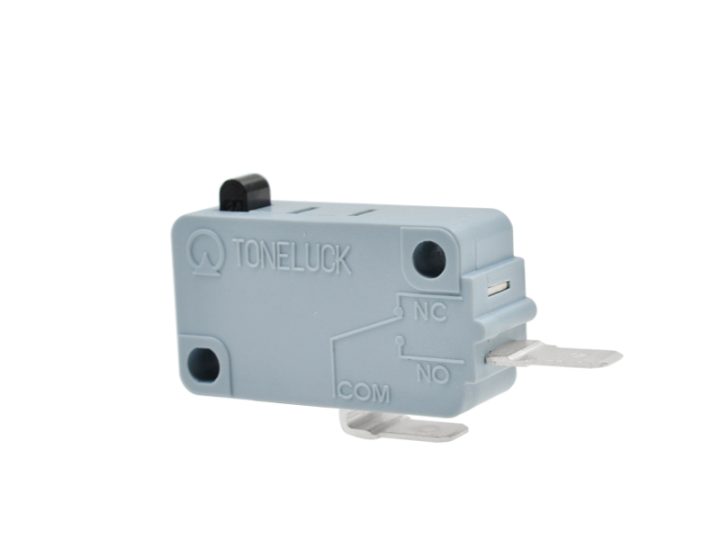
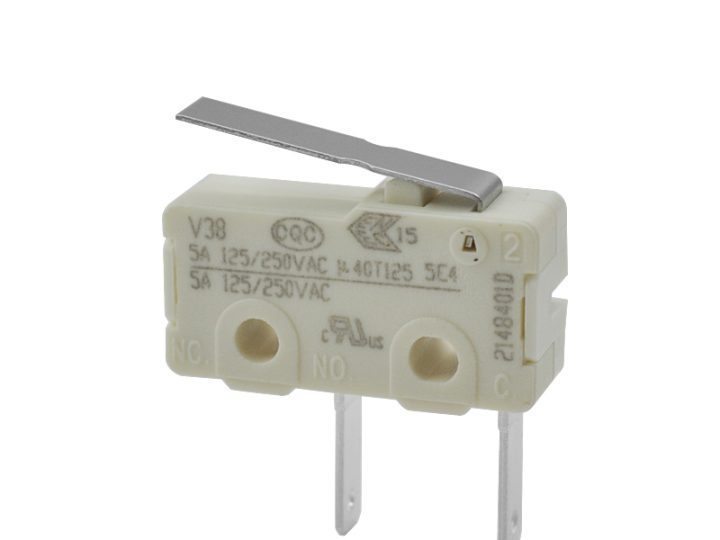
2 Terminal Micro Switch Short Description The V38 2 terminal micro switch is a rare type…
OEM / ODM
Details
Limit and micro switches for garage door travel limits and safety reverse.
A garage door opener uses limit switches, or a combination of limit switches and position sensing, to stop the door at the fully open and fully closed positions. Many North American openers also rely on micro switches for safety reverse, manual release detection and accessory functions.
The duty cycle is demanding: a residential opener can complete thousands of cycles a year, and the switch must repeat the same trip point without drift. Dust, temperature swings and vibration in a garage environment make contact reliability and actuator consistency critical.
| Contact rating | 2A to 16A (model dependent) |
|---|---|
| Voltage | 125/250VAC, 12/24VDC options |
| Contact form | SPST, SPDT |
| Actuation | Plunger, lever, roller lever |
| Operating force | Low-force variants available for sensitive mechanisms |
| Mechanical life | Up to 500,000 cycles minimum on selected ranges |
| Approvals | UL, cUL, ENEC, CE, CQC |
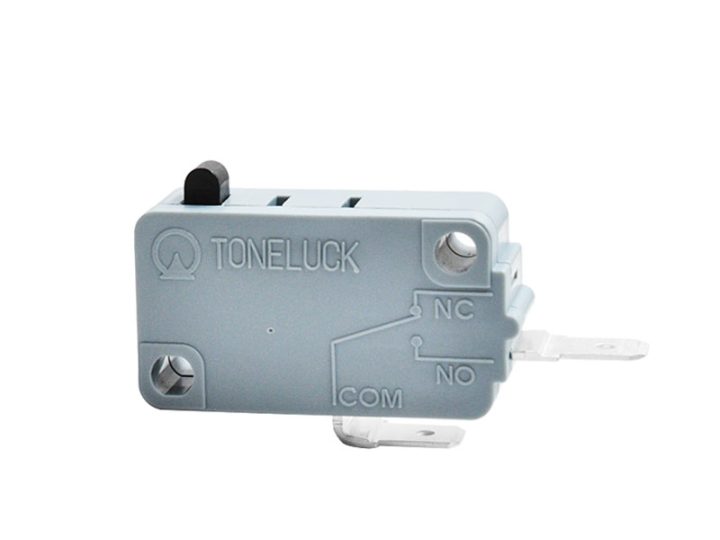
Toneluck supplies snap-action and limit micro switches for high-cycle mechanisms, with model-dependent ratings from 2A to 16A. For replacement projects, send the original switch dimensions, actuator type and contact form; our engineers will match the closest standard model or develop a custom variant for volume programmes.
These Toneluck models are commonly specified for this application. Ratings, actuators and terminals can be adapted for OEM programmes.
2 Terminal Micro Switch Short Description The V38 2 terminal micro switch is a rare type…
Toneluck MQS-216 series microswitches are available from us, this model is an SPST NO switch without…
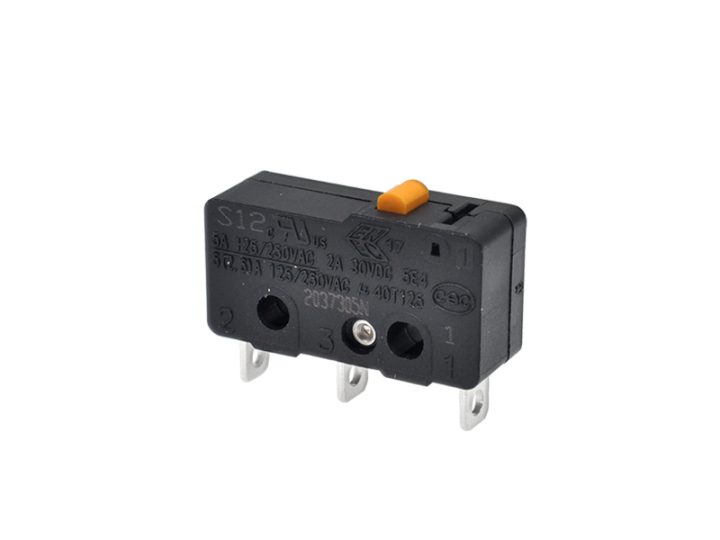
S12AAF200-S01 is SPDT 2A 30VDC or 5A 125/250VAC 3 solder terminal micro switch. And it is…
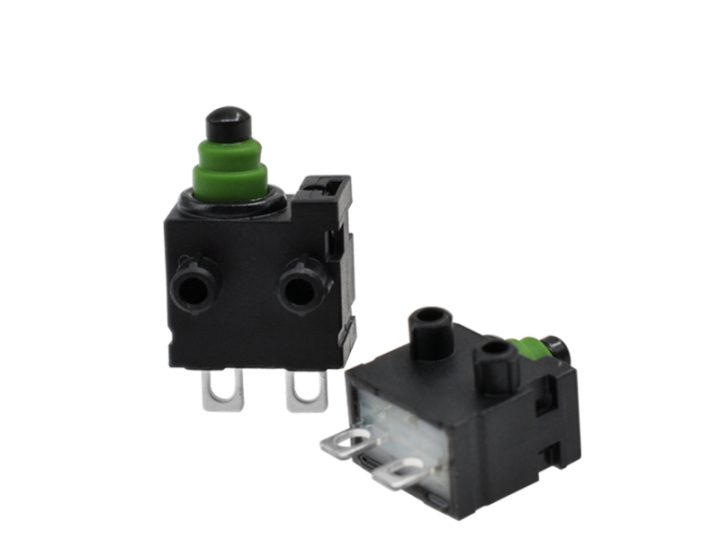
This is normally open waterproof sealed micro switch 1A 16VDC with UL , ENEC, CQC, ROSH,…
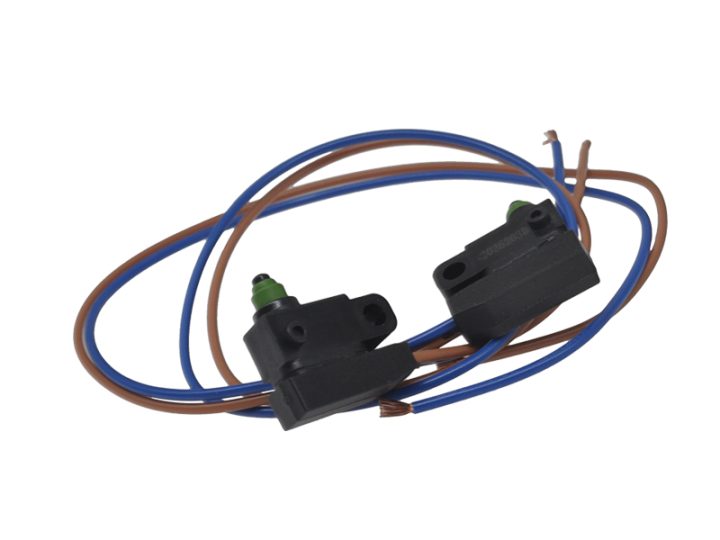
MQS-43 IP67 Micro Switch Waterproof NO Normally Open 2A 12V MQS-4 series micro switch Product name:…
Micro Electrical Switch Short Description The MQS-216SN00BCK-01 micro electrical switch's rating is 16A 125VAC and 250VAC,…
It tells the opener when the door has reached the fully open or fully closed position so the motor stops at the correct travel limit. Some openers also use micro switches for safety reverse and accessory functions.
Common causes are contact wear from repeated cycles, dust and moisture ingress, actuator wear, and loose mounting that changes the trip point. A sealed snap-action switch with stable operating force reduces these failures.
Yes, provided the contact rating, actuator travel, mounting and contact form match the opener design. The switch must also repeat the trip point reliably over many cycles.
Most residential opener control circuits use low-current switches, but commercial and older models may switch higher loads. Toneluck offers models from 2A to 16A; match the original rating or higher.
Yes. IP-rated and sealed micro switches are available to reduce contamination from dust and humidity.
Yes. Custom levers, terminals and mounting brackets can be developed for volume OEM programmes.
Send us your drawings, ratings and volume. We will recommend the closest platform and quote a custom sample.