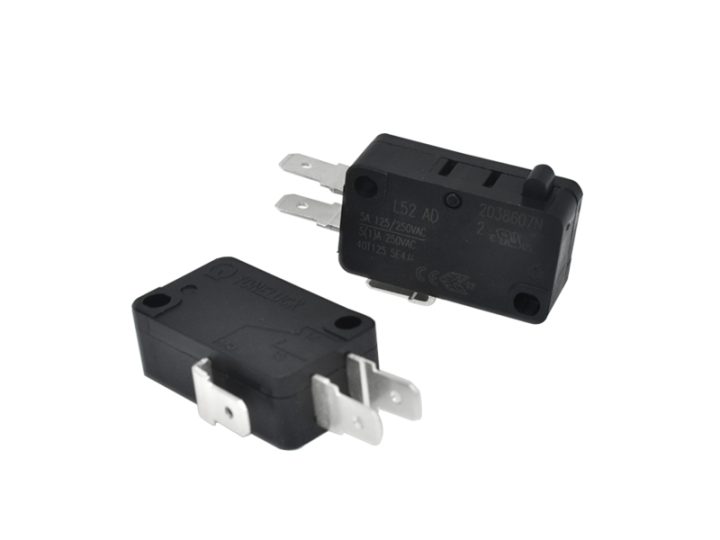
L52AD-BN00A1-01
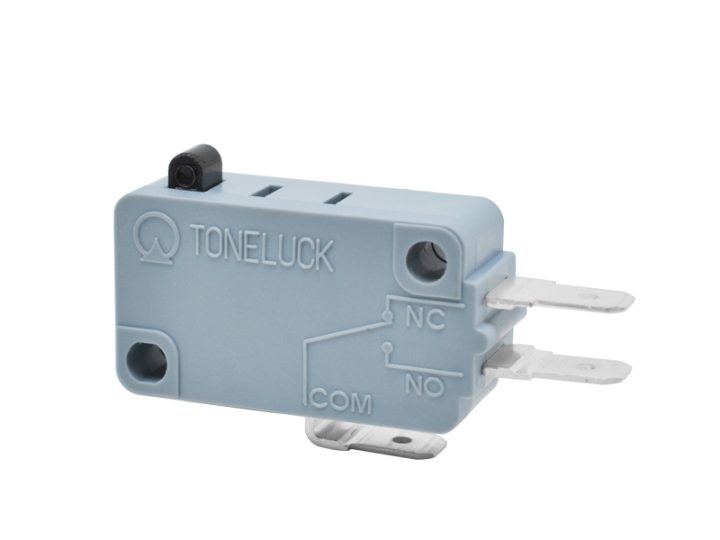
L52 5A Snap Action Micro Switch for Microwave
Toneluck L52 T125 Pin Plunger Snap Action Micro Switch For Microwave 5A 250V 125V L series…
OEM / ODM
Details
Door interlock switches for microwave ovens, including 3-terminal designs.
A microwave oven uses two or more door interlock switches to make sure the magnetron cannot operate while the door is open. A typical arrangement includes a primary interlock, a secondary interlock and a monitor switch that blows the fuse if the interlocks fail in a dangerous combination.
Because these switches protect the user from microwave leakage, replacement parts must match the original contact form, actuator position and electrical rating exactly. Repairs should always be carried out by a qualified technician, with the high-voltage capacitor discharged and the interlocks tested afterwards.
| Contact rating | 5A to 16A at 125/250VAC (model dependent) |
|---|---|
| Contact form | SPST NO/NC, SPDT, 3-terminal |
| Actuation | Door paddle, plunger or lever |
| Operating temperature | -40°C to +85°C standard; high-temperature versions available |
| Mechanical life | Up to 500,000 cycles minimum on selected ranges |
| Approvals | UL, cUL, ENEC, CE, CQC |
For appliance manufacturers, Toneluck supplies interlock switches with custom actuators, terminals and harnesses, supported by UL, cUL, ENEC and CQC approvals. Samples can be provided for design validation and life testing.
These Toneluck models are commonly specified for this application. Ratings, actuators and terminals can be adapted for OEM programmes.
Toneluck L52 T125 Pin Plunger Snap Action Micro Switch For Microwave 5A 250V 125V L series…
Door Micro Switch Short Description Looking for a door micro switch for microwave? The MQS-2 series…
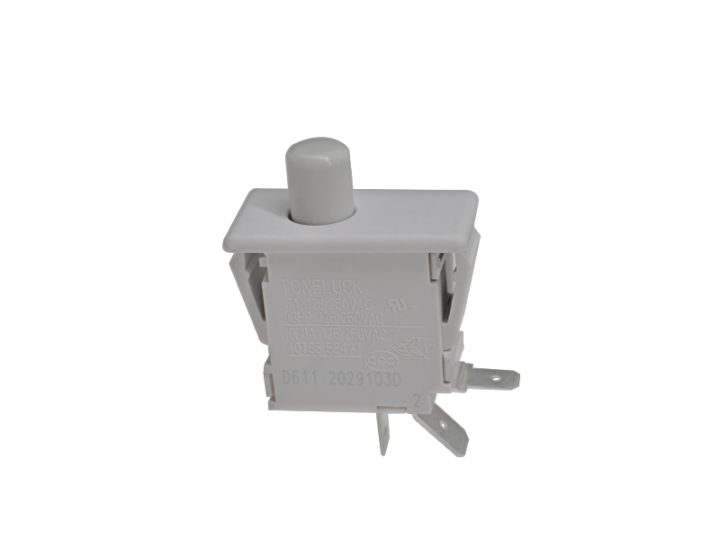
Toneluck D6 Dryer Door Switch is an SPDT 10A switch used in dryers, washing machines, and…
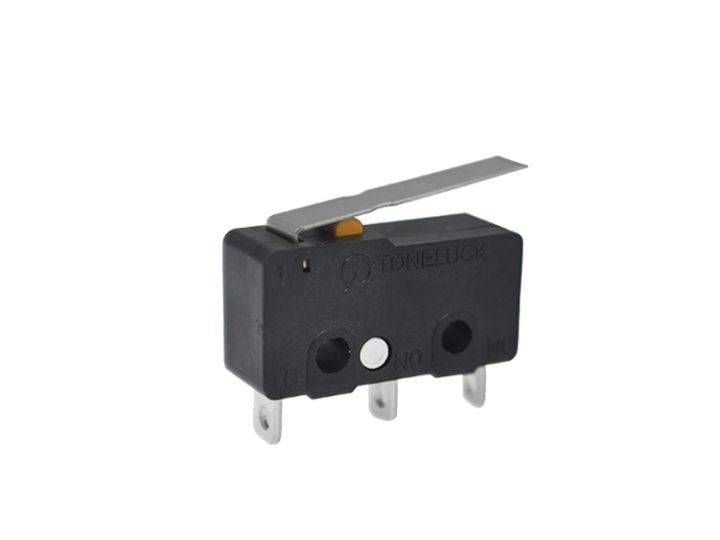
The Toneluck S12AAF201-S01 is a straight lever SPDT momentary micro switch with UL ENEC CQC certification…
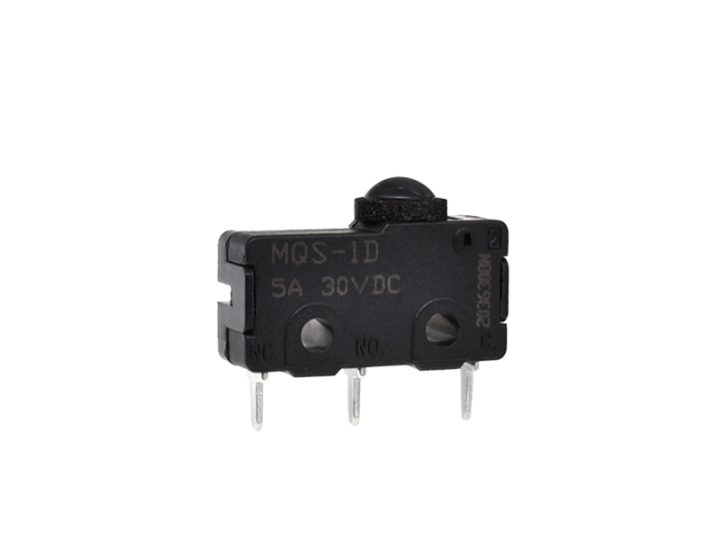
Toneluck MQS-1D is one the famous series that will be used in the power recliner chair…
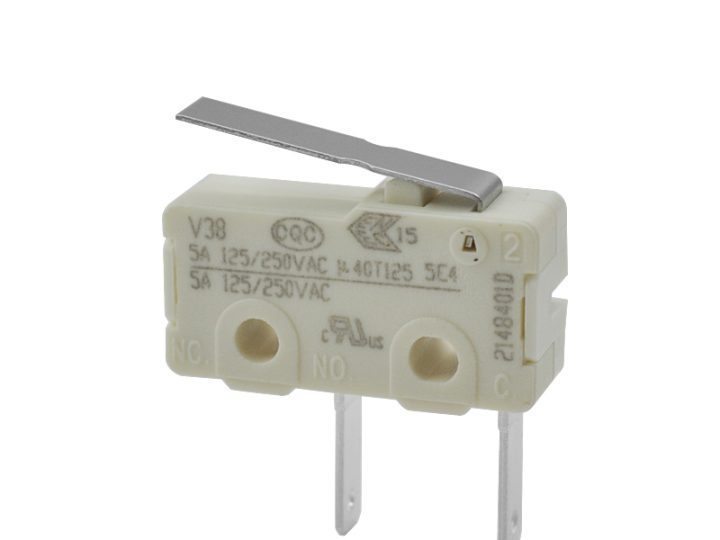
2 Terminal Micro Switch Short Description The V38 2 terminal micro switch is a rare type…
Most microwaves use two interlock switches plus a monitor switch, although the exact arrangement varies by design. Some models combine functions in a 3-terminal switch.
Microwave repair involves high voltage and safety-critical interlocks. Replacement should be carried out by a qualified technician who can discharge the capacitor and verify the interlock and monitor circuits.
A monitor switch is a normally closed switch that creates a short circuit and blows the fuse if the door interlocks fail, preventing the magnetron from operating with the door open.
No. The contact form must match the original circuit. Fitting the wrong type can defeat the interlock protection.
Yes. 3-terminal interlock switches are available as part of the Toneluck range.
Yes. Share the drawing, contact form and rating, and we will provide samples for evaluation.
Send us your drawings, ratings and volume. We will recommend the closest platform and quote a custom sample.